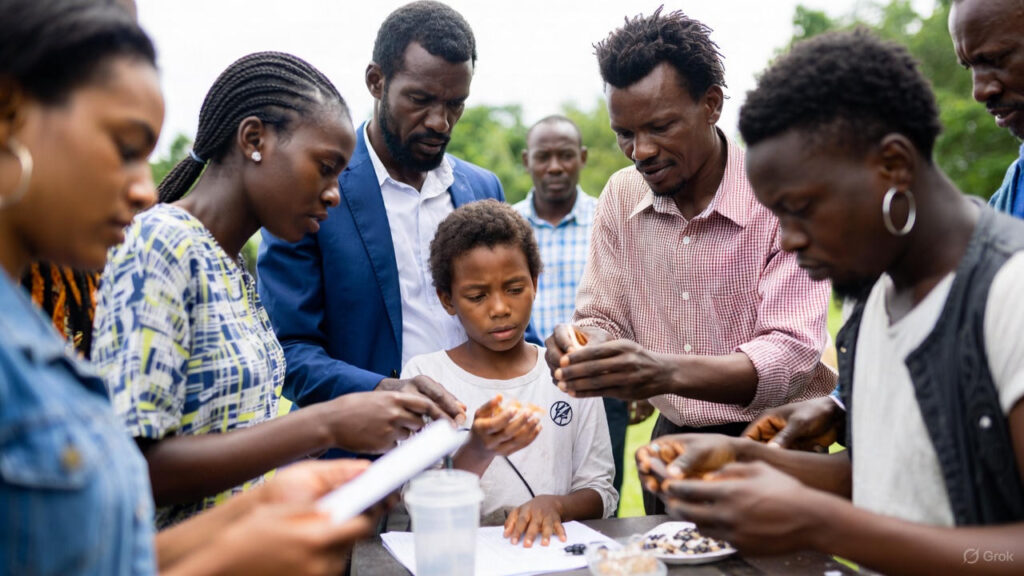

A child born today in Kibera, Nairobi’s largest informal settlement, has a life expectancy 30 years shorter than a child born 12 kilometers away in the leafy suburb of Karen. The biological difference between these two infants is zero. The difference lies entirely in the invisible architecture of opportunity that surrounds them: the quality of the air they breathe, the food they eat in the first 1,000 days, the school they can reach without paying bribes, and the roof that does or does not leak when it rains.
Poverty is not a snapshot; it is a transmission mechanism that moves from parent to child with devastating efficiency unless three specific circuits are deliberately interrupted: nutrition in early childhood, access to quality education, and stable, healthy housing. When all three are secured, the intergenerational cycle of poverty can be broken in a single generation. When even one is missing, escape becomes statistically improbable.
1. Nutrition: The First 1,000 Days That Determine the Next 80 Years
A child who is stunted at age two (height-for-age more than two standard deviations below the WHO median) will, on average, complete 2.5 fewer years of schooling, earn 20–30% less as an adult, and be more likely to live in poverty than a non-stunted peer. This is not because short children are inherently less intelligent. It is because chronic undernutrition permanently rewires the architecture of the developing brain.
Between conception and the second birthday, the human brain forms more than one million neural connections every second. If micronutrients (iron, iodine, zinc, vitamin A, protein-energy) are missing during this window, the prefrontal cortex, hippocampus, and amygdala develop incompletely. The result is lifelong impairment in executive function, memory, impulse control, and emotional regulation (skills that predict economic success better than IQ).
Real-world evidence is brutal:
- In rural Pakistan, children who received multiple micronutrient powders daily from 6 to 18 months earned 16–26% higher wages 20 years later (Follow-up of the 2002–2003 cohort, The Lancet Global Health 2023).
- In Guatemala, boys who received a nutrient-dense supplement (atole) before age three grew up to have 46% higher hourly wages than those who received a low-nutrient drink (INCAB longitudinal study, 1969–1977, re-measured 2002–2004).
- In Zambia, every 10% increase in district-level stunting prevalence predicts a 3.5% lower GDP per capita 15 years later (macro-level analysis, 2021).
Stunting is not rare. In 2024, 149 million children under five are still stunted, almost all in low- and middle-income countries. The majority will never recover cognitively or economically.
2. Education: The Only Known Antidote to Inherited Poverty
Each additional year of schooling raises an individual’s earnings by approximately 9–10% on average, with returns highest for girls (up to 20% per year in some contexts). But the magic is not in the certificate; it is in the cognitive stimulation that occurs when a child is exposed to trained teachers, books, and structured learning between ages 6 and 16.
The most powerful anti-poverty intervention ever rigorously tested is not cash, microcredit, or job training. It is simply ensuring that poor children stay in school.
- Kenya’s primary school fee abolition in 2003 increased enrollment by 20 percentage points. Women who gained an extra year of schooling because of the reform had 0.6 fewer children and were 12 percentage points more likely to have a skilled job (Duflo, Dupas & Kremer, 2021).
- In Uganda, giving adolescent girls information about the higher returns to secondary education (compared to early marriage) plus a small cash transfer increased secondary completion by 66% and reduced teen pregnancy by 40% (Bandiera et al., 2020).
- In Peru, the Juntos conditional cash transfer program, which required school attendance, broke the intergenerational poverty cycle in one generation: children of beneficiaries were 18 percentage points less likely to live in extreme poverty as adults (UNICEF/Transfer Project, 2023).
Yet 260 million children are still out of school globally, and hundreds of millions more are in school but learning nothing. In seven low-income African countries, 80% of grade 4 students cannot read a simple sentence. They are physically present but cognitively absent, condemned to the same low-skill, low-wage trap their parents occupied.
3. Housing: The Silent Multiplier of Every Other Deprivation
Poor housing is not just uncomfortable; it is biologically toxic.
Indoor air pollution from cooking with wood, dung, or charcoal kills more people annually than HIV, malaria, and tuberculosis combined (4 million deaths/year, WHO 2024). Children growing up in these homes suffer repeated respiratory infections that impair lung development and increase school absenteeism.
Damp, overcrowded homes breed mold, asthma, and chronic stress. In the famous Moving to Opportunity experiment in the United States, children under 13 whose families were given vouchers to move to low-poverty neighborhoods earned 31% more as adults and were 27% more likely to attend college (Chetty, Hendren & Katz, 2016). The same biology applies in Lagos, Dhaka, or La Paz.
Lead poisoning from peeling paint or contaminated water irreversibly lowers IQ by 5–10 points. In Zambia, relocating families from lead-contaminated mining towns raised children’s blood lead levels fell by 70% and cognitive scores rose dramatically within one year (Carrel et al., 2023).
Secure tenure matters as much as physical quality. In Buenos Aires, giving squatters formal land titles increased school completion by 35% and reduced teen pregnancy by 50%, because parents invested more in their children when they knew the home would not be taken away (Galiani & Schargrodsky, 2010).
The Triple Intervention That Actually Works
When nutrition, education, and housing are tackled together, the effects are not additive; they are multiplicative.
Case Study: Sobral, Brazil – From Worst to First in 15 Years
In 2000, Sobral, a poor municipality in Brazil’s arid northeast, had the lowest learning outcomes in the country. Stunting rates were over 25%, and most families lived in mud-brick homes without sanitation.
Between 2001 and 2015, Sobral did three things simultaneously:
- Nutrition: Universal school meals with strict nutritional guidelines plus iron and vitamin A supplementation for all children under six.
- Education: Every child enrolled in full-time school by age four, teacher salaries doubled, principals given autonomy, and relentless focus on literacy in grades 1–3.
- Housing & infrastructure: Massive investment in piped water, sanitation, and electricity coverage (from <40% to >95%).
By 2017, Sobral had the highest learning outcomes in Brazil at grade 5, surpassing even wealthy São Paulo. Former students who went through the full cycle now earn 60–80% more than their parents’ generation. Stunting fell below 5%. The city’s poverty rate was cut in half. The mayor who started it all, Moisés Madeira, simply said: “We decided to treat every child as if they were our own.”
Case Study: Rwanda’s Integrated Approach
Since 2000, Rwanda combined:
- Community-based nutrition programs (one cow per poor family, kitchen gardens, fortified porridge in early childhood centers)
- Free 12-year basic education with school feeding
- The Girinka housing program and Vision Umurenge community development plans that upgraded entire villages with electricity, water, and cement-block homes.
Results: Extreme poverty fell from 56% in 2000 to 16% in 2023. Stunting dropped from 51% to 33%. Mean years of schooling doubled. Rwanda is one of the few countries on track to achieve middle-income status by 2035, starting from one of the lowest bases on earth.
The Cost of Inaction vs. the Price of Action
Doing nothing is not free.
The World Bank estimates that childhood stunting alone costs low- and middle-income countries 8–12% of GDP every year in lost human capital. Add in the economic drag from poor education and toxic housing, and the annual loss exceeds $3 trillion globally.
By contrast, the cost of breaking the cycle is surprisingly modest:
- Ending stunting by 2030: $25 billion per year (roughly the price of two U.S. aircraft carriers).
- Universal secondary education: $340 billion over a decade.
- Decent housing and basic services for all: $650 billion annually (less than global fossil fuel subsidies).
These are not utopian numbers. They are investment opportunities with returns measured in centuries of human potential.
A New Social Contract for Children
Breaking the cycle of poverty is not about charity. It is about engineering a different future.
Every society that has escaped mass poverty (South Korea 1960–1995, China 1980–2010, Vietnam 1993–2020) did so by making massive public investments in exactly these three areas during their takeoff decades.
The message is clear: if you want a country without slums in 2050, you must eliminate malnutrition, illiteracy, and toxic housing in 2030. There is no other path.
The child born today in Kibera does not need pity. She needs a plate of fortified beans at age one, a trained teacher at age six, and a house without smoke at age ten. Give her those three things, and by 2045 she will be the doctor treating the children of Karen.
That is not a dream. It is simple arithmetic, proven across continents and decades. The only question is whether we have the political will to do the math.